Health & Fitness
Sitting too much, not just lack of exercise, is detrimental to cardiovascular health
Cardiologists at UT Southwestern Medical Center found that sedentary behaviors may lower cardiorespiratory fitness levels. New evidence suggests that two hours of sedentary behavior can be just as harmful as 20 minutes of exercise is beneficial. The study, published in today’s online edition of Mayo Clinic Proceedings, examined the association between fitness levels, daily exercise, […]

U.S. scientists don’t publish articles about potential role of innate variation in athletic performance
Compared to scientists working in other countries, U.S.-based scientists are underrepresented as authors of articles on the potential role of innate variation in athletic performance that are published in peer-reviewed science journals, according to Grand Valley State University researchers. The findings are published in the online journal SpringerPlus. The research, conducted by Michael P. Lombardo, […]

Brisk walking may improve symptoms of Parkinson’s
People with mild to moderate Parkinson’s disease who regularly walk for exercise may improve their motor function, mood, tiredness, fitness and some aspects of thinking abilities, according to a study published in the July 2, 2014, online issue of Neurology®, the medical journal of the American Academy of Neurology. “The results of our study suggest […]

Explaining ‘healthy’ obesity
Up to one-quarter of individuals currently labeled as obese are actually metabolically healthy and do not have a high risk of developing type 2 diabetes. Though obesity is a major risk factor for diabetes, the two conditions aren’t always linked. A study published by Cell Press July 3rd in the journal Cell sheds light on […]
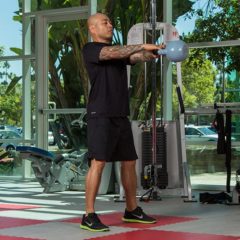
How to Select the Right Sets and Tempo for Your Clients
The principle of progression states that if an exercise program is to produce the desired outcome, the intensity should gradually become more challenging to apply an effective overload. This tells us that an individual needs to work harder, but that the changes to a program should be incremental and not occur all at […]

Insulin pumps result in better blood sugar control than multiple daily injections in people with type 2 diabetes
Type 2 diabetes is usually controlled by diet and medication, but most people with advanced disease also end up needing insulin therapy to achieve control of their blood sugar. However, roughly a third of these patients struggle to achieve the right level of blood sugar control with insulin injections many times a day. The growing […]

Process that affects fat distribution, metabolic syndrome found by researchers
Building upon their earlier research on the biology of fat metabolism, Joslin scientists discovered that microRNAs -small RNA molecules that play important roles in regulation in many types of tissue — play a major role in the distribution and determination of fat cells and whole body metabolism. Also, the study is the first to reveal […]
Insect diet helped early humans build bigger brains: Quest for elusive bugs spurred primate tool use, problem-solving skills
Figuring out how to survive on a lean-season diet of hard-to-reach ants, slugs and other bugs may have spurred the development of bigger brains and higher-level cognitive functions in the ancestors of humans and other primates, suggests research from Washington University in St. Louis. “Challenges associated with finding food have long been recognized as important […]

Does Long-Distance Training Saddle Young Cyclists with Fragile Bones?
Young cyclists training to join the Tour de France could be causing irreversible damage to their bones. The combination of cycling extreme distances and restricting caloric intake to reduce weight can decrease bone density to levels that put young athletes at greater risk for serious fractures and, in the long term, developing osteoporosis. It is […]

ACE Participates in First-of-its-kind Health Policy Fair on Capitol Hill
July 1, 2014, 12:00AM PT in Fitnovatives Blog | The ACE Advocacy staff visited with members of Congress and their staff last week at the #WhyGetActive Health Policy Fair on Capitol Hill. The first-of-its-kind event featured a cross-section of 10 national and international leaders in the promotion of physical activity who, along […]