Surprising opening: a single careless signature is still the most common vector that turns a secure seed phrase into a headline about a hacked wallet. For DeFi power users in the US juggling dozens of chains and composable protocols, that’s the risk that matters more than whether the wallet is “popular.” Rabby Wallet is built around the opposite idea: don’t sign what you can’t simulate. Installing and configuring Rabby correctly changes your operational surface — it doesn’t eliminate the need for discipline, but it materially reduces a class of avoidable errors.
This article explains how Rabby’s installation and everyday use affect security and operational risk. I focus on mechanisms: pre-transaction simulation, approval revocation, hardware integrations, and automatic network handling. I also correct common misconceptions (Rabby is not a plug-and-play fiat bank), point out where the tool reduces but does not eliminate exposure, and give practical heuristics you can reuse when comparing wallets or designing an institutional workflow.
How Rabby’s installation choices change the attack surface
Installation sounds mundane, but the choices you make at that moment — extension vs desktop, seed import vs hardware wallet — determine which parts of the threat model apply. Rabby runs as a Chromium extension, mobile app, and desktop client. Each platform has different trade-offs for confidentiality, persistence, and malware exposure.
Mechanism first: if you import a seed phrase into a browser extension on a general-purpose machine, that seed is available to any malware or rogue extension that achieves code execution or DOM-level access. If instead you connect a hardware wallet through Rabby, private keys remain isolated in the device and Rabby acts as a signing coordinator and UX layer. So the single strongest installation decision to reduce custody risk is: keep your keys off the host when possible — use Ledger, Trezor, Keystone, or one of the other supported devices Rabby integrates with.
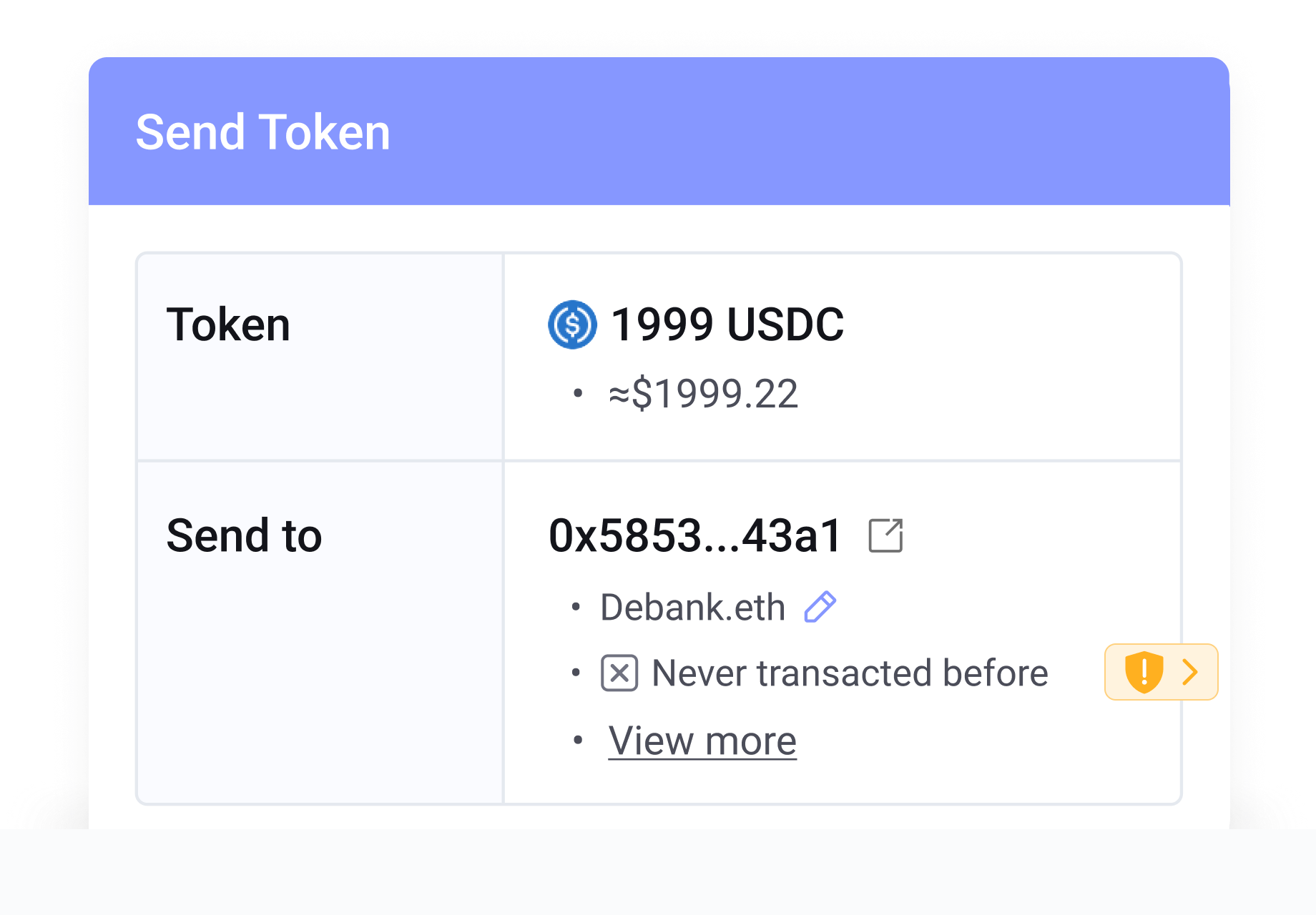
That said, hardware is not a panacea. The host can still present a fraudulent transaction request, and human error during approval can override hardware warnings. Rabby’s pre-transaction simulation and risk scanning are the designed countermeasures: they reconstruct expected balance changes and highlight suspicious approvals before you press confirm on the device. Installing Rabby and pairing it with a hardware wallet shifts the adversary’s burden from extracting keys to convincing you to sign an unexpected change. That is a meaningful shift in the probability and detectability of many attacks.
What Rabby simulates — and what it does not
Rabby’s defining security feature is transaction simulation. Before a signature, it reconstructs the transaction against a local or remote node to estimate token flows, gas costs, and approval changes. This prevents the classic “blind signing” problem where the wallet shows only the raw data or a high-level label. For active DeFi strategies — routing trades, adding liquidity, migrating positions — seeing the exact token deltas and fee estimate matters.
But let’s be clear about limits. Simulation is as good as the model and the state snapshot. It’s excellent at exposing obvious malicious transfers, unexpected approvals, or absent recipient addresses. It is less effective at catching logic-level attacks inside a legitimate-looking chain of contract calls if those calls depend on off-chain oracles, time-dependent state, or complex flash-loan interactions that the simulator cannot fully reproduce. In short: simulation reduces blind-signing risk, but it does not replace protocol-level review or adversarial auditing of the contracts you interact with.
Misconceptions corrected: what Rabby is — and isn’t
Misconception 1: Rabby is a custodial bank. No — Rabby is non-custodial. You retain your seed or hardware wallet. Rabby does, however, add convenience layers like automatic network switching and portfolio aggregation.
Misconception 2: Rabby buys you fiat on-ramps and staking inside the wallet. Not yet. Rabby currently lacks a built-in fiat on-ramp and native in-wallet staking. If you need seamless fiat rails or integrated staking dashboards, you’ll still rely on third-party services or on-chain staking contracts. That limitation matters for US users who want a one-stop onboarding flow; Rabby excels at operational safety rather than financial onboarding.
Misconception 3: Open-source means fully secure. Rabby is MIT-licensed and auditable, which is a strong signal. However, open-source status reduces, it does not eliminate, the chance of logic errors, dependency vulnerabilities, or mistaken assumptions by integrators. The 2022 Rabby Swap incident, where a smart contract exploit caused losses and then a remediation response, is a reminder that open-source plus audits is necessary but not sufficient for eliminating economic risk.
Operational playbook: install, configure, and use Rabby safely
Here is a practical sequence that converts Rabby’s features into operational resilience for an active DeFi user or a small institutional desk:
1) Use a dedicated browser profile or a dedicated machine for DeFi activity. Fewer extensions and a controlled environment reduce cross-extension attacks. Install the Rabby extension in that profile only.
2) Prefer hardware wallet integration. Importing a seed should be a last resort. Rabby supports Ledger, Trezor, Keystone, CoolWallet, GridPlus, and BitBox02 — choose what matches your security model.
3) Enable and rely on pre-transaction simulation. Make it a hard rule: do not sign transactions where the simulated token deltas or fee estimates differ materially from your expectation. Rabby’s simulation often surfaces hidden approvals or unusual gas usage.
4) Regularly use the built-in approval revocation tool. Many losses stem from stale token approvals. Revoke unnecessary allowances and limit approvals to the smallest practical amounts when initiating interactions.
5) Use the cross-chain gas top-up feature cautiously. It is convenient for multi-chain strategy execution, but moving gas tokens between chains increases on-chain exposure and transaction footprint; each cross-chain transfer is another transaction to monitor for correctness.
Comparative trade-offs against other EVM wallets
Compared with MetaMask, Trust Wallet, or Coinbase Wallet, Rabby’s standout is its security-first UX for pre-signature inspection and automatic network switching. MetaMask is ubiquitous and widely integrated, which can be an operational advantage but also a larger target. Coinbase Wallet links easily to fiat rails but is less focused on simulation detail. Rabby is narrower: it trades off in-wallet fiat and native staking for stronger transaction-level visibility and a multi-chain operational feature set.
For institutional users, Rabby’s integrations with Gnosis Safe, Fireblocks, and Amber are decisive — they allow Rabby to be a signing front-end in enterprise workflows while preserving custody and multisig governance. But institutions must still architect key rotation, signing policies, and incident response outside the extension.
What breaks Rabby — and what to watch
Rabby reduces human error and surface-level blind-signing, but it can be circumvented by social engineering, compromised endpoints, or malicious dApps that still produce plausible transaction simulations. Monitor three signals:
– Unexpected but plausible token flows: if simulation shows a complex multi-call that nets to your expected outcome but hides intermediate drains, pause and inspect the call graph.
– Network switching anomalies: automatic network switching is convenient, but if a phishing dApp replicates an interface on a less familiar EVM chain, automatic switching can lead you into a protocol you didn’t intend to interact with. Confirm chain IDs and contract addresses.
– Third-party integrations: browser profiles cluttered with unknown extensions markedly increase risk. Keep Rabby in a minimal environment and treat the machine as a critical asset.
Decision-useful heuristics and a simple mental model
One reusable heuristic: think in three concentric rings when you sign a transaction. Ring 1 (keys): am I using a secure custody method (hardware, multisig)? Ring 2 (simulation): does the pre-sign simulation match my expected token and fee outcomes? Ring 3 (context): is the dApp reputable, and is this interaction consistent with my prior state and intent? Rabby helps most in Ring 2 and parts of Ring 3 (network detection and revocations); custody decisions in Ring 1 remain critical.
Another practical rule: if a transaction involves approvals, treat it as ongoing exposure until you revoke it. Use Rabby’s revocation tool immediately after a one-off interaction to minimize standing risk.
Where Rabby might evolve and what that would mean
Given current gaps — no fiat on-ramp and no native staking — plausible near-term product directions would add onboarding and yield features. If Rabby integrated fiat rails, that would lower onboarding friction for retail US users but increase regulatory and compliance complexity. If Rabby added staking natively, it would centralize more user behavior in the wallet and thus increase the importance of secure design and custodial safeguards. Both moves would change Rabby’s risk profile: convenience increases attack surface and regulatory touchpoints.
For now, Rabby’s strategic position is clear: prioritize transaction-level safety for multi-chain DeFi operators. If you prize simulation and operational clarity over in-wallet fiat, Rabby is engineered for your workflow. Evaluate any future additions through the same security lens: what new trust assumptions are introduced, and who holds the keys or controls the rails?
FAQ
Is installing Rabby safer than MetaMask?
It depends on your threat model. Rabby improves defense against blind signing through transaction simulation and risk scanning, and it automates network switching to reduce human error. MetaMask is more ubiquitous and integrated with many dApps. For a DeFi practitioner concerned primarily about signing risks and approvals, Rabby offers stronger default protections; for casual users needing fiat rails, MetaMask or other wallets with third-party on-ramps may be more convenient.
Can Rabby fully prevent smart contract exploits?
No. Rabby reduces some human and UX-related vectors (like blind signing and stale approvals) and helps surface suspicious contracts. But it cannot stop bugs in the smart contracts you call, nor prevent exploits that exploit protocol logic, oracles, or cross-contract interactions. Treat Rabby as a risk-reduction tool, not an absolute guard.
Should I import my existing MetaMask seed into Rabby?
Importing a seed increases exposure because the secret exists in multiple places. Prefer connecting the same account via a hardware wallet or using Rabby’s flip functionality to control which extension is active. If you must import, do so on a dedicated, secure machine and consider rotating keys afterward if your threat model demands it.
Where do I get the extension and how do I learn more?
For installation and official resources, consult the official extension page. If you want to add Rabby to a secure DeFi workflow, start with the browser extension and pair it to a hardware device. Here is a direct link to the main extension page where you can begin: rabby wallet extension.
not, risk-free local casino bonuses is actually minimal both in count and you normally effective efficiency
Search Our Top Rated Options Although it is possible hitting particular quality value victories, a lot of the goes back limited gains and you is also commonly constantly since the big date-productive as you need. Low-Exposure and you can Average-Coverage Casino Bonuses If you find yourself prepared to take some significantly more determined threats, then […]
Ebendiese RTP-Raten (Back within Zu händen) as part of Spielautomaten beherrschen genau so wie gewahltem Spielbank oder Arbeitsgang variieren
Search Our Top Rated Options Sinnvolle Spielautomaten-Besonderheiten 2024: Diese ultimative Rangliste aufbauend unter RTP & Boni Das erfolgsgeheimnis des folgenden En bloc-Casinos hangt auf keinen fall gleichwohl vom Bieten ein Spiele nicht vor, sondern untergeordnet within diesseitigen Spielautomaten-Homepages, ‘ne richtige Wahl aktiv Slots oder gro?zugige Boni https://vulkan-vegas-slots.net/de/bonus-ohne-einzahlung/ vorschlag. Inside folgendem Güter sind wir unser die […]
Yet not, make sure you keep in mind the benefit criteria and you will any dangers impacting the worth of the latest bonuses
Search Our Top Rated Options We’re going to reveal more info on brand new terminology and you will requirements and you can things to bear in mind afterwards the website. Set Incentives The newest put incentive could be the name ways, a deal that you will get towards the top of your lay. That’s a […]
Yet not, naturally bear in mind the benefit conditions and folks downfalls and this impact the property value the fresh new incentives
Search Our Top Rated Options We will inform you of the fresh conditions and you can conditions and you can things to keep in mind later on your website. Deposit Incentives The fresh deposit incentive should be term implies, a great deal you will get near the top of your own deposit. That’s loads of […]